2026, вып. 1 (29)
Издательство: РИЦ НБ РС(Я)
Год выпуска: 2026
Серия, номер выпуска: 2026, вып. 1 (29)
Количество страниц: 63 с.
Год выпуска: 2022

Издательство: Якуткнигоиздат
Год выпуска: 1964
Количество страниц: 24 с.
Год выпуска: 2026

Год выпуска: 2010
Количество страниц: 70 с.
Количество страниц: 8 с.
- Общественные науки. Образование > Экономика. Экономические науки. Политическая экономия > Экономическое положение. Экономическая политика. Управление и планирование в экономике. Производство. Услуги. Цены,
- Прикладные науки. Медицина. Ветеринария. Техника. Сельское хозяйство > Сельское хозяйство. Лесное хозяйство. Охота. Рыболовное хозяйство,
- НАУКА ЯКУТИИ > ОБЩЕСТВЕННЫЕ НАУКИ > Экономика. Экономические науки. Политическая экономия,
- НАУКА ЯКУТИИ > ПРИКЛАДНЫЕ НАУКИ. МЕДИЦИНА. ТЕХНИКА. СЕЛЬСКОЕ ХОЗЯЙСТВО > Сельское хозяйство. Лесное хозяйство. Охота. Рыболовное хозяйство.
- 1. Чудинов Павел Леонидович, Фридовский Валерий Юрьевич. Применение алгоритмов машинного обучения для прогнозирования золоторудной минерализации Верхнеамгинского щелочного массива, Алдано-Становой щит = Application of machine learning algorithms to predict gold mineralizationin the Verkhneamginsky alkaline massif, Aldan-Stanovoy Shield
- 2. Сукнев Сергей Викторович. Влияние условий водонасыщения на прочность карбонатных пород при сжатии = Influence of water saturation conditions on the compressive strength of carbonate rocks
- 3. Андреева Сахая Николаевна. Стратегии жизни плотнодерновинных злаков Festuca lenensis Drob. и Koeleria cristata (L.) Pers. в степных сообществах Центральной Якутии = The life strategies of firm-bunch grasses Festuca lenensis Drob. and Koeleria cristata (L.) Pers. in the steppe communities of Central Yakutia
- 4. Рожина Сахаяна Михайловна, Местникова Анна Александровна, Cлепцов Игорь Витальевич. Хемотаксономические исследования деревьев рода Larix на территории Центральной Якутии = Chemotaxonomic investigations of Larix species in Central Yakutia
- 5. Боескоров Василий Степанович, Саввинов Григорий Николаевич. Ископаемые остатки мезофауны четвертичного периода Янского плато как индикаторы палеоландшафтных условий позднего плейстоцена = Fossil specimens of the mesofauna from the Quaternary period of the Yana Plateau as indicators of the paleolandscape conditions during the late Pleistocene
- 6. Кершенгольц Борис Моисеевич. Национальный проект России "Биоэкономика" на Северо-Востоке Евразии: биопрепараты из тканей холодоадаптированных дикоросов и аборигенных видов животных = National project of Russia “Bioeconomics” in the North-East of Eurasia: biopreparations from tissues of cold-adapted wild plants and native animal species
- 7. Васильев Андрей Петрович, Охлопкова Айталина Алексеевна, Стручкова Татьяна Семеновна, Алексеев Алексей Гаврильевич. Влияние механохимической активации диоксида церия на структуру и свойства политетрафторэтилена = Effect of mechanochemical activation of cerium dioxide on the structure and properties of polytetrafluoroethylene
- 8. Ксю Мингсян, Гоголева Ольга Владимировна, Соколова Марина Дмитриевна, Петрова Павлина Николаевна, Федоров Андрей Леонидович, Кондаков Михаил Николаевич, Чжан Дайфен. Исследование изменения свойств СВМПЭ в натурных условиях г. Якутск в зависимости от сезона экспонирования = Study of the changes in the properties of UHMWPE under the natural environmental conditions of Yakutsk based on seasonal exposure
- 9. Природные ресурсы Арктики и Субарктики = Arctic and Subarctic natural resources, 2025, №2 (Т. 30)
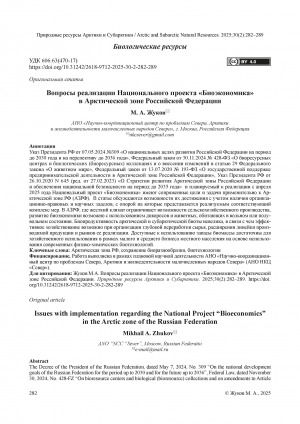
The Decree of the President of the Russian Federation, dated May 7, 2024, N 309 “On the national development goals of the Russian Federation for the period up to 2030 and for the future up to 2036”, Federal Law, dated November 30, 2024, N 428-FZ “On bioresource centers and biological (bioresource) collections and on amendments to Article 29 of the Federal Law “On the Animal World”, Federal Law, dated July 13, 2020, N 193-FZ “On state support for entrepreneurship in the Arctic zone of the Russian Federation”, Decree of the President of the Russian Federation, dated October 26, 2020, N 645 (as amended on February 27, 2023) “On the Strategy for the Development of the Arctic Zone of the Russian Federation and Ensuring National Security for the Period up to 2035”, and the National Project “Bioeconomics” planned for implementation starting in April 2025, share related goals and objectives in relation to the Arctic zone of the Russian Federation (AZRF). This article explores the potential for achieving specific objectives by evaluating the availability of organizational, legal, and scientific resources, which collectively indicate that a corresponding set of measures is feasible for implementation. In the Arctic Zone of the Russian Federation, where the harsh climate limits agricultural production, the development of a bioeconomy is achievable through the use of wild plants and animals that exist in free or semi-free conditions. The bioproductivity of Arctic and subarctic biota is relatively low; therefore, effective management can be attained through the establishment of advanced processing techniques for raw materials, the diversification of manufactured products, and the expansion of markets for their distribution. The biomass reserves available for use are sufficient to support economic activities within the framework of small and medium-sized enterprises operated by the local population, leveraging contemporary physical and chemical biotechnologies.
Жуков, М. А.
Вопросы реализации Национального проекта "Биоэкономика" в Арктической зоне Российской Федерации / М. А. Жуков // Природные ресурсы Арктики и Субарктики. - 2025. - N 2, Т. 30. - С. 282-289. - DOI: 10.31242/2618-9712-2025-30-2-282-289
DOI: 10.31242/2618-9712-2025-30-2-282-289
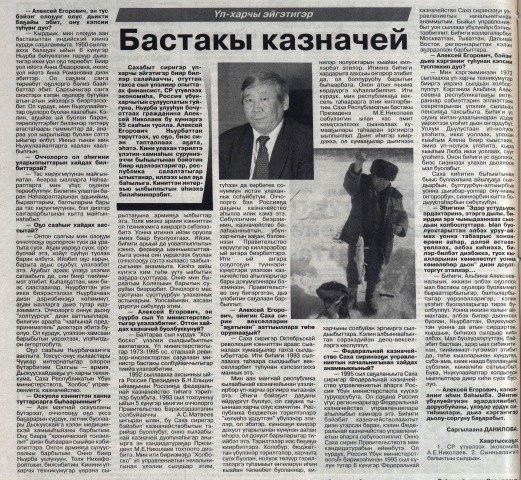
Источник: Саха сирэ. - 2005. - 2005. - Балаҕан ыйын 8 к.- С. 4.
Количество страниц: 1 с.
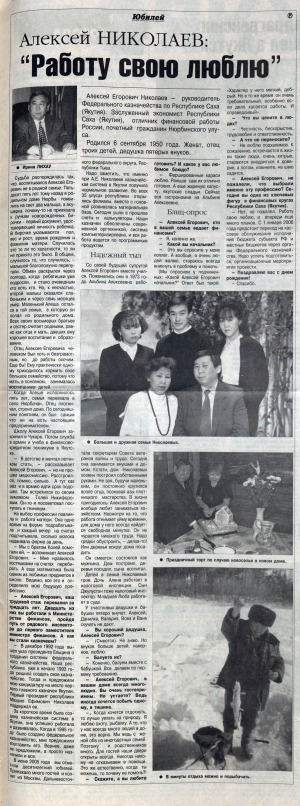
Источник: Якутия. - 2005. - 6 сент. - С. 7.
Количество страниц: 1 с.
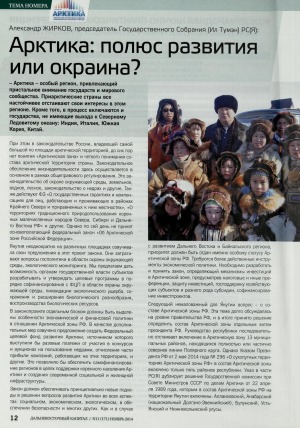
Источник: Дальневосточный капитал. - 2014. - N 11 (171). - С. 12-13.
Количество страниц: 2 с.
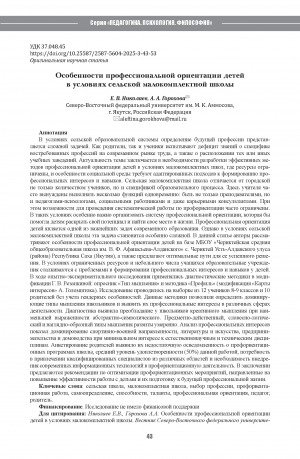
Количество страниц: 11 с.
- Общественные науки. Образование > Экономика. Экономические науки. Политическая экономия > Труд. Наука о труде. Экономика труда. Организация труда,
- Общественные науки. Образование > Народное образование. Воспитание. Обучение. Организация досуга > Общеобразовательная школа. Дошкольные учреждения,
- НАУКА ЯКУТИИ > ОБЩЕСТВЕННЫЕ НАУКИ > Экономика. Экономические науки. Политическая экономия,
- НАУКА ЯКУТИИ > ОБЩЕСТВЕННЫЕ НАУКИ > Народное образование. Воспитание. Обучение. Организация досуга.
In the context of a rural educational system, determining a future profession is a difficult task. Both parents and students lack knowledge about the specifics of sought-after professions in the modern labor market, as well as the location of certain educational institutions. The relevance of the topic lies in the need to develop effective methods of vocational guidance for children in small schools, where resources are limited and the peculiarities of the social environment require adapted approaches to the formation of professional interests and skills. Rural small-scale schools differ from urban schools not only in the number of students, but also in the specifics of the educational process. Here, teachers are often forced to perform several functions at the same time: to be not only teachers, but also educational psychologists, social workers, and even career consultants. At the same time, opportunities for systematic career guidance are often limited. In such circumstances, it is especially important to organize a professional guidance system that would help children reach their potential and find their place in life. The professional orientation of children is one of the most important tasks of modern education. However, in conditions of rural small schools, this task becomes especially difficult. In this article, the authors examined the features of the professional orientation of children on the basis of the V. F. Afanasyev-Aldansky Cheriktey Secondary School in Cheriktey village of Ust-Aldansky District, Republic of Sakha (Yakutia), and will try to find optimal ways to successfully solve it. In the course of the experimental study, diagnostic techniques modified by G. V. Rezapkina were used: the “Type of Thinking” questionnaire and the “Profile” technique (a modification of the “Map of Interests” by A. Golomstock). The study was conducted on a sample of 12 students in grades 8-9 and 10 parents without taking into account gender characteristics. These methods made it possible to identify the dominant types of thinking of schoolchildren and identify their professional interests in various fields of activity. The diagnostics revealed the predominance of creative thinking among schoolchildren with the least expression of abstract-symbolic thinking. Objective-effective, verbal-logical, and visual-imaginative types of thinking are moderately developed. The analysis of professional interests showed the dominance of sports and military orientation, literature and art, entrepreneurship and home economics with minimal interest in natural sciences and technical disciplines. The survey of parents revealed their lack of awareness of the school’s career guidance programs, an average level of satisfaction (50%) with this job, the need to attract qualified specialists from various fields, and the need to introduce modern information technologies into career guidance activities. With limited resources and a small number of students, educational institutions face challenges in shaping children’s professional interests and skills. In conclusion, recommendations are made on optimizing career guidance measures aimed at improving the effectiveness of working with children and preparing them for future professional life.
Николаев, Е. В.
Особенности профессиональной ориентации детей в условиях сельской малокомплектной школы / Е. В. Николаев, А. А. Горохова ; Северо-Восточный федеральный университет им. М. К. Аммосова // Вестник Северо-Восточного федерального университета им. М. К. Аммосова. Серия "Педагогика. Психология. Философия". - 2025. - N 3 (39). - С. 43-53. - DOI: 10.25587/2587-5604-2025-3-43-53
DOI: 10.25587/2587-5604-2025-3-43-53